
Every tool was made for a purpose
The last Mishnah in Pirkei Avos says it directly: “All that the Holy One, blessed be He, created in His world, He created solely for His glory.” The Lubavitcher Rebbe read that line as a mandate. If everything in creation exists for a holy purpose, then so does every new technology, and when a person can’t yet see that purpose, the problem is with the person’s view, not the tool. He applied this to radio when many objected to it, pointing out that the same people used the telegraph for business without hesitation. Chabad took the lesson online early: its outreach on early computer networks began in 1988, years before most businesses had a website.
Search and AI answers are today’s radio. Someone wondering about Shabbos at 1 a.m. no longer walks into a shul or calls a rabbi first. They ask Google, or ChatGPT, and they get whatever answer is easiest for the machine to find and trust. The question for a rabbi isn’t whether to be there. It’s whether the answer people get carries real Torah, in a real teacher’s voice.

The demand is already there
We pulled a keyword list of 1,000 questions people search about Judaism. Together they add up to roughly 103,000 searches a month in the US alone. The biggest are basic: “what is judaism” (7,900), “how old is judaism” (5,000), “when was judaism founded” (4,100), “how to convert to judaism” (1,400), “is judaism an ethnicity” (1,100). Further down the list are the questions that sound like a real person on a real night: whether Jews believe in heaven, what the names of G-d mean, why people give charity in multiples of 18.
These are exactly the questions shluchim answer every week across a Shabbos table. The difference is that online, nobody is answering them in that voice. That’s a visibility gap, and it’s the same gap we close for actors and small businesses. Search engines and AI models reward clear, trustworthy, well-structured answers from a recognizable person. A rabbi with decades of teaching is exactly that, if the machines can read it.
What the teachers people follow are already doing
Some rabbis have already shown what’s possible. None of them did it by acting like a marketer.
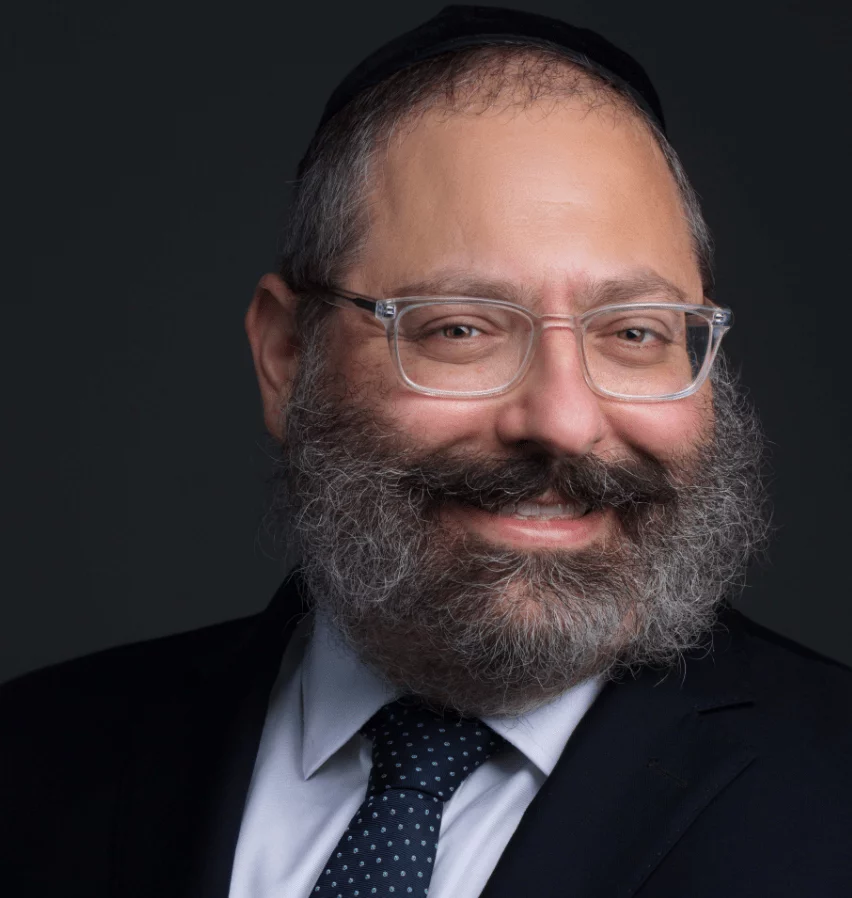
www.theyeshiva.net
Rabbi YY Jacobson on Facebook
Photo: TheYeshiva.net
Rabbi YY Jacobson teaches one of the largest online Torah classes in the world through TheYeshiva.net. He described the turning point to the Australian Jewish News: “I was travelling around the world for many years and spoke everywhere, and then I realised that with today’s technology we can create a global yeshivah.” In a 2020 class, “How to View Internet & Technology,” he put the purpose plainly: “The purpose of the internet is that Torah should be spread to every single corner of the world.” It allows a teacher “to give a shiur in our home in Monsey, New York, and be heard by hundreds and sometimes by thousands and sometimes by tens of thousands of people the world over.”
In the same class he named the other side: “The greater the blessing, the greater the challenge.” Speaking to families, he drew a line that holds just as well for a teacher online: “We need times when we’re just together, person to person, face to face, heart to heart, soul to soul. You cannot allow technology to take over your life and own you. You have to own it.” The screen can open the door. The relationship still happens in person.
Rabbi Shais Taub reaches a huge audience through his SoulWords classes and YouTube channel, and yet one of his recent conversations, on the Living L’Chaim podcast, is about why constant connectivity leaves people lonely, and why showing up in person is the cure social media can’t be. Visibility, done right, is a doorway to a real relationship, not a substitute for one.
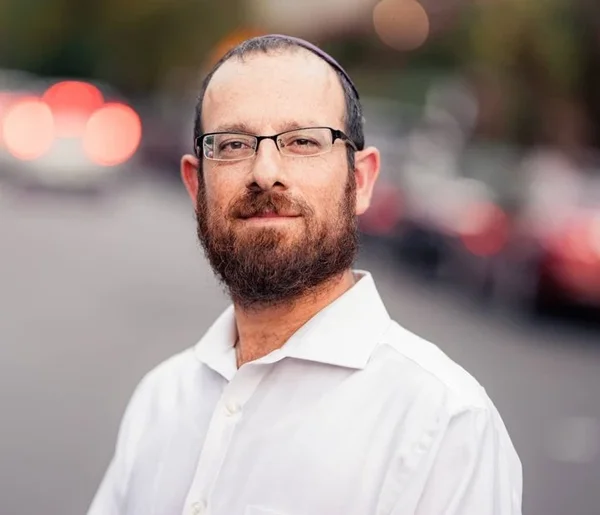
TikTok
YouTube
Podcast
Photo: Jewish Community Voice
Rabbi Avrohom Rapoport, known online as Rabbi Raps, is a shliach with Chabad at the Shore in Ventnor, New Jersey, whose social following passed 450,000 by mid-2025 and has kept growing. He tells fellow rabbis that staying off social media today “is like not having a website 20 years ago.”
His case is the same one this article makes, seen from the other side of the screen. A rabbi used to see a community member “once a week at shul, or maybe once a month at an event,” he told us. “Today, I’m showing up on their phone several times a day!” What gets shared matters as much as how often. His advice is to post not only Torah thoughts but the ordinary parts of a rabbi’s day: a mezuzah taken down from someone’s home because it wasn’t kosher, and why; the food being cooked for the community break-fast; the Shabbos candlesticks polished before Shabbos, “because a mitzvah should be done in a beautiful way.”
Those are the moments a rabbi takes for granted, and they’re the ones an outsider finds most meaningful. They also happen to be the strongest kind of content online: specific, first-hand, and impossible to copy. As he puts it, Judaism “isn’t just something we do in shul or on holidays. It’s part of everything we do, from morning until night.”
Rabbi Yaakov Wilansky of Chabad of Roslyn on Long Island leads the community’s CTeen chapter, the kind of in-person work that rarely shows up in a feed but changes lives. After a recent teen Shabbaton he told Anash.org: “We had an incredible Shabbaton weekend connecting with amazing teens.” That’s the outcome every bit of online visibility should serve: a parent who searches “Jewish teen programs near me” and finds the rabbi who will actually show up. He also teaches online: his podcast The weekly Haftarah explains the reading from the Prophets that follows each week’s Torah portion, including his class on Toldos.

What we’re building for Live613
Rabbi Shlomo Fuchs is a Chabad rabbi who works with students in London, and a SEMPITE client. His site, Live613, is the home for his teaching: Torah and Chassidic wisdom applied to real life, written for anyone looking for a fuller way to live. Here is the work, in plain terms.
His words, never ours. Every teaching on Live613 is his. We don’t rewrite a rabbi’s Torah to chase a keyword. What we add is the frame around it: a clear title, a short summary up top, headings that match what people actually ask, and a few common questions answered beneath. His teaching on what 18 means in Judaism is the model. It answers “18 in judaism,” “why is 18 important,” and “why is 18 a lucky number” (it isn’t about luck, he explains), with FAQ schema so search engines and AI models can lift the answer cleanly and credit him for it.
Answering the questions people already ask. That 1,000-question list above is his roadmap. Each new teaching is matched to questions on it, so his voice is there when someone searches. Over time, the goal is that when an AI engine is asked a question about Judaism, a living rabbi’s answer is one of the sources it trusts.
Accessible to everyone. A Torah site should be usable by everyone, including people who use a screen reader, need larger text, or can’t easily read small type on a phone. Live613 has an accessibility toolbar on every page, an accessibility statement that aims for WCAG 2.2 AA and names the known gaps, and audio narration on selected teachings so they can be listened to. The narration is AI-voiced with his permission and labeled as such on the page. Being honest about how something was made is part of the job.
The plumbing nobody sees. One consistent site and identity, an old domain redirected into it, a teachings-by-email signup, and privacy and terms pages that make clear a teaching online is not a personal halachic ruling. None of it is glamorous. All of it is what makes a site trustworthy to people and to machines.
Honest marketing is the only kind that works here
Jewish law asks for honesty in business down to the smallest falsehood, and the Rebbe taught that success ultimately comes from Hashem, not from cutting corners. For a rabbi online, that rules out the tricks: fake reviews, inflated follower counts, clickbait that the teaching doesn’t deliver. It also happens to be what AI search rewards. Models cross-check what a site says against everything else written about it. Consistent, accurate, verifiable information wins. A rabbi has a head start, because truth is already the product.
Where a shliach can start
You don’t need a media team. Start with three things. First, search your own name and your Chabad House the way a stranger would, on Google and in ChatGPT, and write down what comes back. Second, make sure your website, Google Business Profile, and listings agree on who you are, where you are, and what you offer. Third, take the questions you’re asked most often and answer each one on its own page, in your own words, with the answer in the first two sentences. That’s the core of generative engine optimization, and nobody is more qualified to do it than someone who has been answering those questions for years.
Keep going
- AI Search Visibility (GEO) service: how we get brands named in ChatGPT, Perplexity and AI Overviews
- AI Visibility Index: our measurement of whether AI assistants name the businesses Google ranks first
- Free Google rank checker: see the exact position and Google page you hold for any keyword
Our Research On This
Original SEMPITE studies, live queries, recorded answers, named sources. Free to cite under CC BY 4.0.
- Who Google’s AI Recommends in Sports Nutrition, 5.1% of AI citations go to brand-owned sites
- The 3 Publishers That Control Supplement AI Answers, 77% of AI supplement answers come via 3 publishers
- AI Visibility Index, 95% of Google top-3 businesses ChatGPT never names
If you teach Torah, run a Chabad House, or lead a community and want the people already searching to find you, a SEMPITE Brand Audit shows how Google and the AI engines describe you today, in plain English.
Get Your Brand Audit →Frequently Asked Questions
Should rabbis and Chabad shluchim be on social media and search?
Yes, with intention. The Rebbe taught that every creation, including new technology, exists for a holy purpose, and Chabad has used online tools for outreach since 1988. People now ask Google and AI chatbots their first questions about Judaism, so a rabbi who is findable there can be the one who answers.
How many people search for questions about Judaism?
A list of 1,000 common Judaism questions adds up to roughly 103,000 searches a month in the US. The largest single query, "what is judaism," gets about 7,900 a month, followed by questions like how old Judaism is, when it was founded, and how to convert.
How can a rabbi show up in AI search results like ChatGPT or Google AI Overviews?
Publish clear answers to the questions people actually ask, in your own words, with the answer in the first sentences. Add FAQ schema, keep your name, organization, and location consistent across your site, Google Business Profile, and directories, and make sure other reputable sites describe you the same way.
Does SEO mean changing a rabbi's teachings?
No. At SEMPITE the rabbi's words stay exactly as he wrote or said them. The optimization happens around the teaching: the title, a short summary, headings that match search questions, an FAQ section, and structured data that helps search engines credit the right person.
Why does accessibility matter for a Torah website?
Because Torah is meant for everyone. An accessible site works for people who use screen readers, need larger text, or read on a small phone screen. Live613 includes an accessibility toolbar, a published WCAG 2.2 AA accessibility statement, and labeled audio narration of selected teachings.
Leave a Comment
Have a question or something to add? Drop a comment below.