What Sam Altman actually said
The memory discussion runs from about 27:00 to 29:45 in the episode, “Why Sam Altman is against a single superintelligence”. Collison opens it with high prices for “memory, and GPUs, and everything” and asks how the market’s fix is coming along. Altman’s answer:
“I think the invisible hand is failing right now.” (27:27)
His explanation is that memory makers spent decades in boom and bust cycles, where you would “invest $20 billion of CapEx to make $19 billion,” and now that they stand to make enormous profits, they remember “how many times they almost went bankrupt by making too many fabs,” which “leads them to be conservative in their CapEx.”
Then he turned to people who run AI on their own machines (29:06):
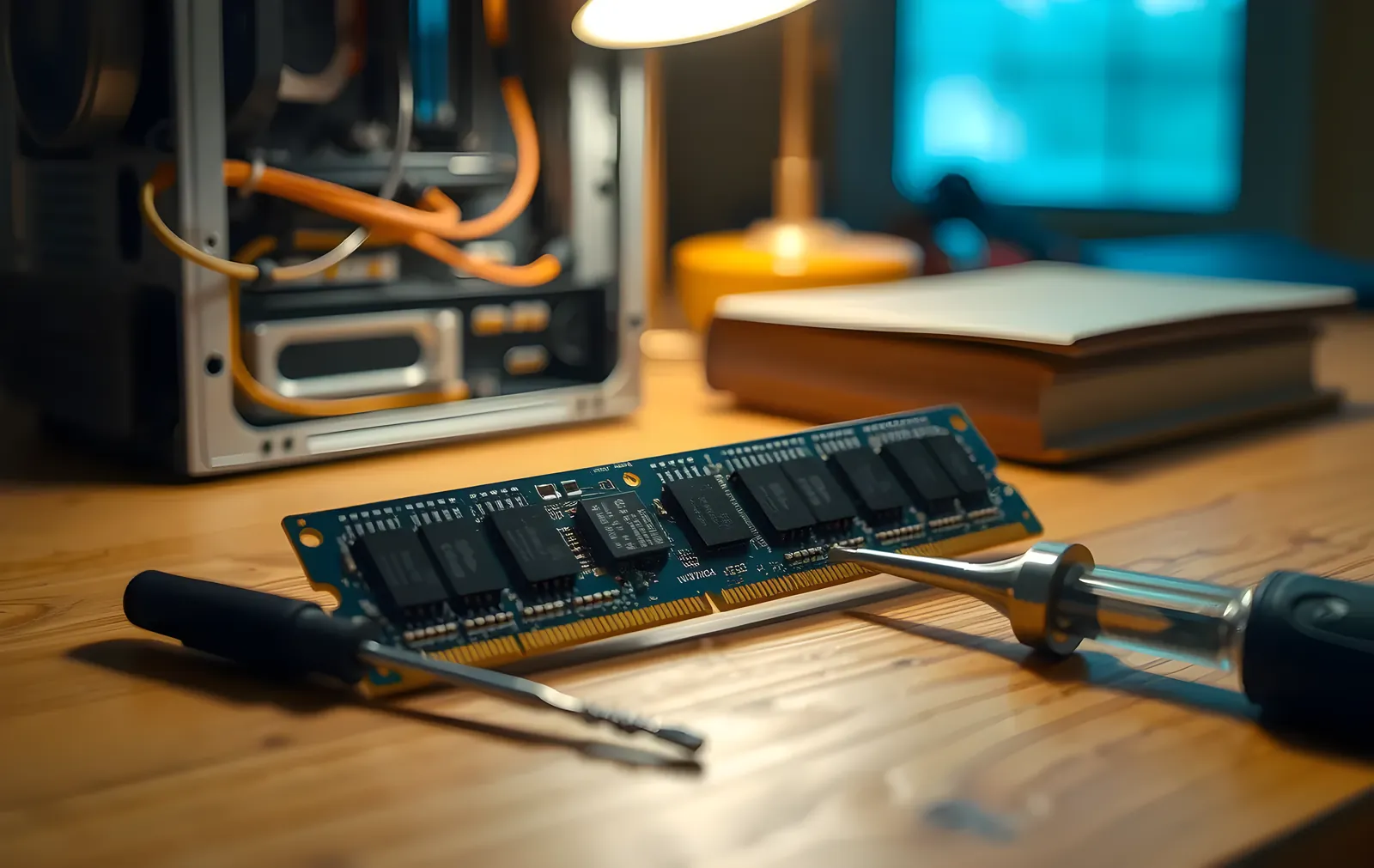
“A lot of people want local inference. And somehow, they assume that the problem is solved now. Because, we are going to have open-source models. We’re going to be able to run them on our computers. And so we’re not going to need all the stuff in the data center. But from a global allocation perspective, actually, it’s quite terrible to have everybody have a bunch of the world’s limited supply of DRAM sitting in their own computer. And, being used 5% of the time. You want maximum utilization in the cloud if you’re trying to deal with this very supply constrained environment.”
To be fair to him, this is an efficiency argument, not an attack on gamers. A server serving thousands of people around the clock gets more work out of each chip than a desktop that sits idle overnight. Later in the episode he says he wants memory to get cheaper: “If it doesn’t go down, I’ll be very sad. But for it to go down, given how much value there is in this, supply’s got to go way up.” (38:31)
PC Gamer read it the same way: he is “bemoaning an inefficiency within the AI industry rather than taking aim at us pesky gamers.” Then it added: “It still feels a bit rich for Altman to complain about the memory scarcity OpenAI and ChatGPT helped create.”
The internet was less charitable, and you can see why. “Everybody” with DRAM “sitting in their own computer” describes every gaming rig, console, editing workstation and laptop. Windows Central’s headline was “You don’t hate him enough.”
Why RAM got so expensive
You can’t separate the comment from the context it landed in.
On October 1, 2025, OpenAI announced that Samsung and SK hynix had signed letters of intent to supply its Stargate data center project, with a target of 900,000 DRAM wafer starts per month. Tom’s Hardware measured that against projected global DRAM capacity of about 2.25 million wafers a month: roughly 40% of the world’s output. These were letters of intent, not binding orders, but the market read them as a signal that memory makers would steer production toward AI.
Here is what happened to consumer prices over the next year, from Tom’s Hardware’s analysis of PCPartPicker data (average prices, August 2025 vs. August 2026):
| DDR5 kit | Aug 2025 | Aug 2026 | Change |
|---|---|---|---|
| 2×16GB DDR5-6000 | $108 | $572 | +429% |
| 2×32GB DDR5-5600 | $191 | $1,118 | +485% |
| 2×32GB DDR5-6000 | $222 | $1,272 | +473% |
And it isn’t over. On September 30, 2026, TrendForce forecast that conventional DRAM contract prices will rise another 10 to 15% in Q4 2026, driven by AI server demand. It noted that notebook inventories “are increasingly reflecting higher component costs” and that PC brands are cutting SSD capacities in mainstream models to hold prices down.
So when the CEO of the company at the center of that demand says consumer memory is the inefficient part, people notice.
Where the 5% argument breaks down
The number has no source. Altman didn’t say where 5% comes from or what it measures. The most likely reading is how often memory is under heavy load, not how much of it is in use. Those are very different claims.
Idle is not the same as useless. RAM works like a workbench. It has to be there when you start working, not at an average moment. A game, a browser with forty tabs, or a 4K editing timeline needs its memory ready the second you open it. You can’t rent it back from a data center halfway through a boss fight.
The industry is selling the opposite. Nvidia, whose chips power OpenAI’s data centers, sells the DGX Spark, a desktop AI computer with 128GB of unified memory, built for running and fine-tuning models locally. The industry clearly doesn’t think local memory is waste.
There is a business interest here. OpenAI makes its money from cloud inference. Every model running on someone’s own machine is a query that never reaches OpenAI’s servers. That doesn’t make Altman wrong about utilization, but it is reason to question his framing.
Why local AI still matters
I run local AI models every day. SEMPITE hosts its own open models on its own hardware, and client data used in our audits and research never goes to a third-party AI company. That is a deliberate choice, and the memory crunch hasn’t changed my mind about it.
Here is what local inference gets you that the cloud doesn’t:
- Privacy. Your prompts, documents and client files stay on your machine. For a law firm, a therapist, a startup with unreleased product plans, or anyone handling customer data, that is the whole point.
- Predictable cost. You pay for hardware once. There is no per-token bill that grows as you use it more, and no price change announced by email.
- It works offline. No outage, rate limit or terms-of-service change shuts you down.
- Control. You choose the model, you choose when to update it, and nobody quietly swaps in a different one behind your workflow.
Is a 128GB workstation running a model three hours a day less “efficient” than a hyperscale GPU cluster? On a utilization chart, yes. But efficient for whom? The cluster is efficient for its owner. The workstation is efficient for the person who owns their data, their costs and their tools.
What this means for small businesses and creators
You don’t need to rush out and buy memory at today’s prices. But it is worth knowing which way the biggest AI companies want the market to go: toward a world where the useful compute lives in their data centers and you rent it.
- Don’t overbuy RAM right now unless you have a specific workload. Prices are near record highs and TrendForce expects them to keep rising this quarter.
- Know what you’re sending to cloud AI. If a tool processes client data, find out where it goes and whether it is used for training.
- Small local models are better than you think. Many everyday tasks, like summarizing, drafting, sorting and tagging, run fine on modest hardware.
- Keep your options open. Building your whole workflow on one AI vendor is a dependency. Being able to run something locally is insurance.
If you’re curious how AI engines see your own brand right now, our free visibility check is a good place to start.
Keep going
- AI Search Visibility (GEO) service: how we get brands named in ChatGPT, Perplexity and AI Overviews
Our Research On This
Original SEMPITE studies, live queries, recorded answers, named sources. Free to cite under CC BY 4.0.
- Who Google’s AI Recommends in Sports Nutrition, 5.1% of AI citations go to brand-owned sites
- The 3 Publishers That Control Supplement AI Answers, 77% of AI supplement answers come via 3 publishers
- AI Visibility Index, 95% of Google top-3 businesses ChatGPT never names
Want to know how AI search engines describe your business? A SEMPITE Brand Audit checks your visibility in Google, ChatGPT, Perplexity and more, and our research runs on privately hosted models.
Get Your Brand Audit →Frequently Asked Questions
What did Sam Altman say about RAM?
On the October 29, 2026 episode of Cheeky Pint with John Collison, he said that from a global allocation perspective it is "quite terrible to have everybody have a bunch of the world's limited supply of DRAM sitting in their own computer," used "5% of the time," and that you want "maximum utilization in the cloud" during a supply shortage.
Did Sam Altman blame gamers for the RAM shortage?
No. He blamed memory makers for being cautious about building new factories, saying "the invisible hand is failing right now." His point about home PCs was about efficiency, but his wording covers every consumer PC and console, which is why gamers reacted.
Why are RAM prices so high in 2026?
AI data centers are buying memory faster than factories can make it. In October 2025, Samsung and SK hynix signed letters of intent to supply OpenAI's Stargate project with up to 900,000 DRAM wafer starts a month, about 40% of projected global output. Consumer DDR5 kits cost roughly four to six times more in August 2026 than a year earlier.
Is running AI locally worth it?
For privacy-sensitive work, predictable costs and offline use, yes. Small and mid-sized open models handle many everyday business tasks on consumer hardware, and your data never leaves your machine.
Where does the 5% figure come from?
Altman did not give a source. It most likely refers to how often memory is under heavy load, not how much of it sits empty.
Leave a Comment
Have a question or something to add? Drop a comment below.