The Brand Audit · Sample Excerpts
What the Audit Actually Shows You
Smart buyers, and, lately, AI assistants advising them, ask the right question: show me the actual queries, engine answers, and measurement method before I pay. Fair. Below are real excerpts from real SEMPITE audits and proposals, identifying details redacted or replaced. The mockups are the actual mockups delivered.
1. The AI query matrix: real engine answers, quoted
We ask the engines the questions your customers ask, and record exactly what came back. This excerpt is from the June 2026 baseline audit of a bilingual New York actress (name redacted; one engine column shown: the report covers ChatGPT, Claude, Perplexity, and Google AI):
| Keyword / Query | Claude | Brand excerpt |
|---|---|---|
| Client name (her name) | ✓ Cited | “Here’s an overview of redacted based on available information…” |
| Latina actress | ✗ Missing | – |
| Latina voice actor | ✗ Missing | – |
| SAG-AFTRA Latina actress | ✗ Missing | – |
The pattern above is the most common baseline we see, and it matches our published research: the engines knew her name, and never surfaced her for a single category query a casting director might actually ask. That gap (known when asked directly, invisible when it matters) is what the rest of the audit exists to close. Badge definitions: Cited = named with her site linked · Mentioned = named only · Missing = absent.
2. Prescriptive recommendations, with an owner and a priority
Every finding ends in an instruction someone can act on Monday. Real examples, verbatim from delivered reports:
Restores site integrity immediately; a dead internal link on a money page leaks both crawl equity and trust.
IMDb is a primary source AI engines corroborate performers against; stale credits cap how confidently they can describe you.
Engines cite pages that answer questions with first-hand specificity, the one content type competitors can’t copy.
Notice what these are not: “improve E-E-A-T” is an observation. “Update IMDb monthly, here’s why, you own it, medium priority” is a plan.
3. How before/after is measured
The baseline is a measurement, not a mood: the exact query set, per-engine results, Search Console position data, and an overall score (this client’s baseline: 42/100). Then the same queries are re-run on a schedule and the deltas are reported: mentions gained, citations gained, ranking queries added. No re-interpretation, no moved goalposts: same questions, new answers.
And because we publish our measurement work, you can see this exact client’s “after” in public: she is the anonymized actress in our Time to Visibility study, from 6 monthly search impressions and 1 ranking query at baseline to 341 impressions and 125 ranking queries by August. The audit is page one of that story.
4. Where the calls are leaking, in dollars and map positions
The findings section does not say "improve local SEO." It says what was measured, what it costs, and what fixes it. These five are from the July 2026 proposal for a family-run locksmith on Long Island's North Shore (name withheld), pulled from live search-volume and map-pack data for its towns:
In the top 3 map results for 0 of the 8 core searches checked. Number 4 in its home town, absent in five neighboring towns. About 9,900 people a month search "emergency locksmith near me" in this market, and those clicks cost $12 to $22 each in ads. Competitors catch them.
Yelp lists one town, the Better Business Bureau another. Google penalizes a business whose name, address, and phone do not line up. Fix: one correct address everywhere, and the listing set up as a service-area business since the van goes to the customer.
A customer who calls expecting 24/7 gets no answer and calls someone else, or leaves a bad review. Fix: make the hours honest and turn them into a trust signal, with a callback promise.
Ask ChatGPT or Google AI for a locksmith in its town and it almost never comes up. The site has none of the structure those tools read. Almost no local locksmith has fixed this yet, which is a chance to get ahead instead of catch up.
Letting a stranger into your home is a trust decision. License, "we stick to our prices," real reviews, and years in business were all missing above the fold. 10 Google reviews at 5.0 while the shops winning the map spots have 50 to 750. The rating is there, the volume is not, and volume is fix number one.
5. What to fix, shown on your own site
Every audit includes a screenshot walkthrough of the current site with the problems numbered, followed by a mockup of what the fix looks like. Here is the locksmith's homepage as it was, identifying details redacted:
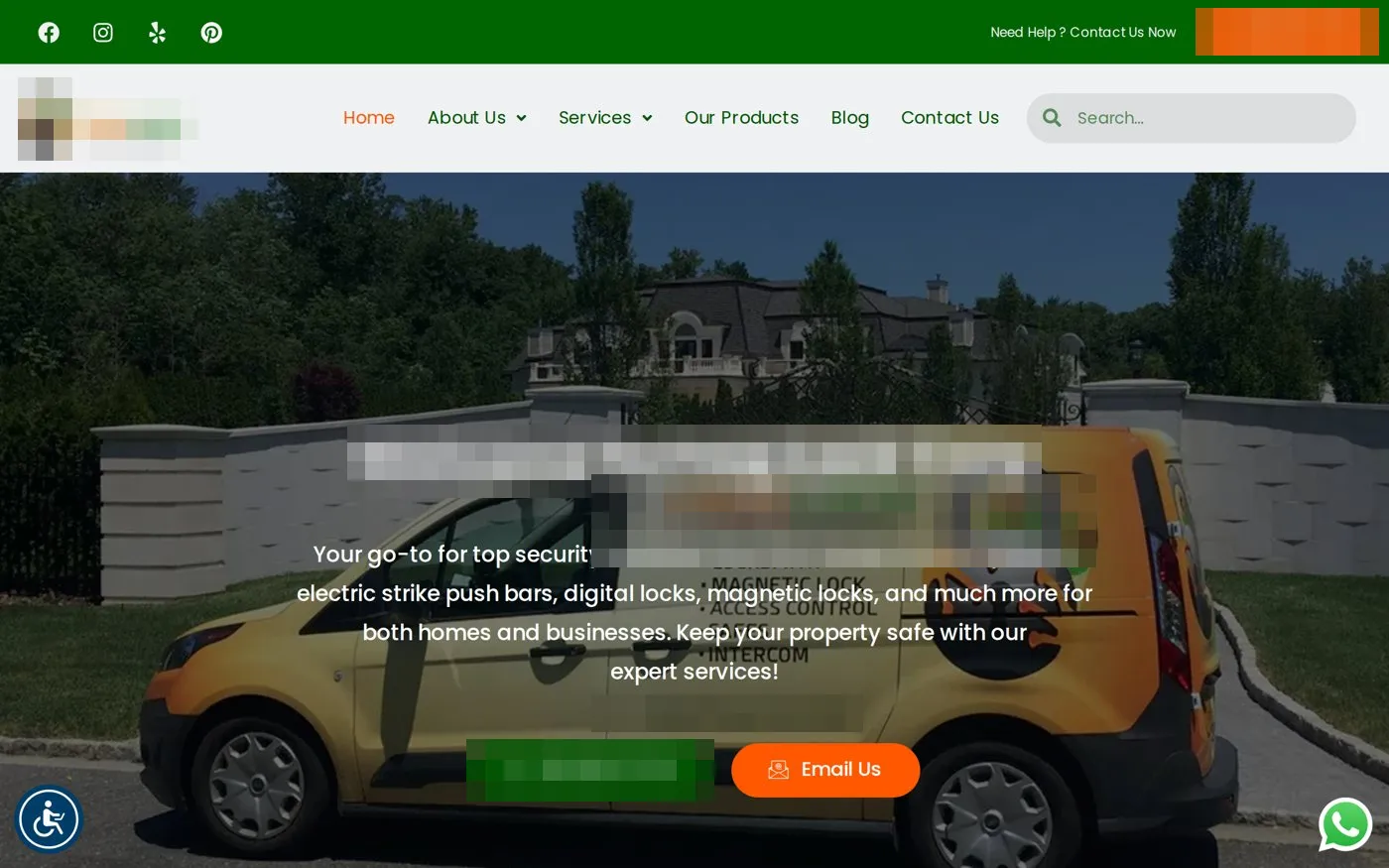
- 1Headline says "Welcome to" instead of the one thing a stranded customer needs to read.
- 2No prices anywhere, on a business whose whole reputation is "we stick to our prices."
- 3License, years in business, and reviews are nowhere above the fold.
- 4A shop-template nav with a search bar and "Our Products," for a service business people call in a panic.
- 5The photo shows the van but the copy never says "we come to you," the actual differentiator.
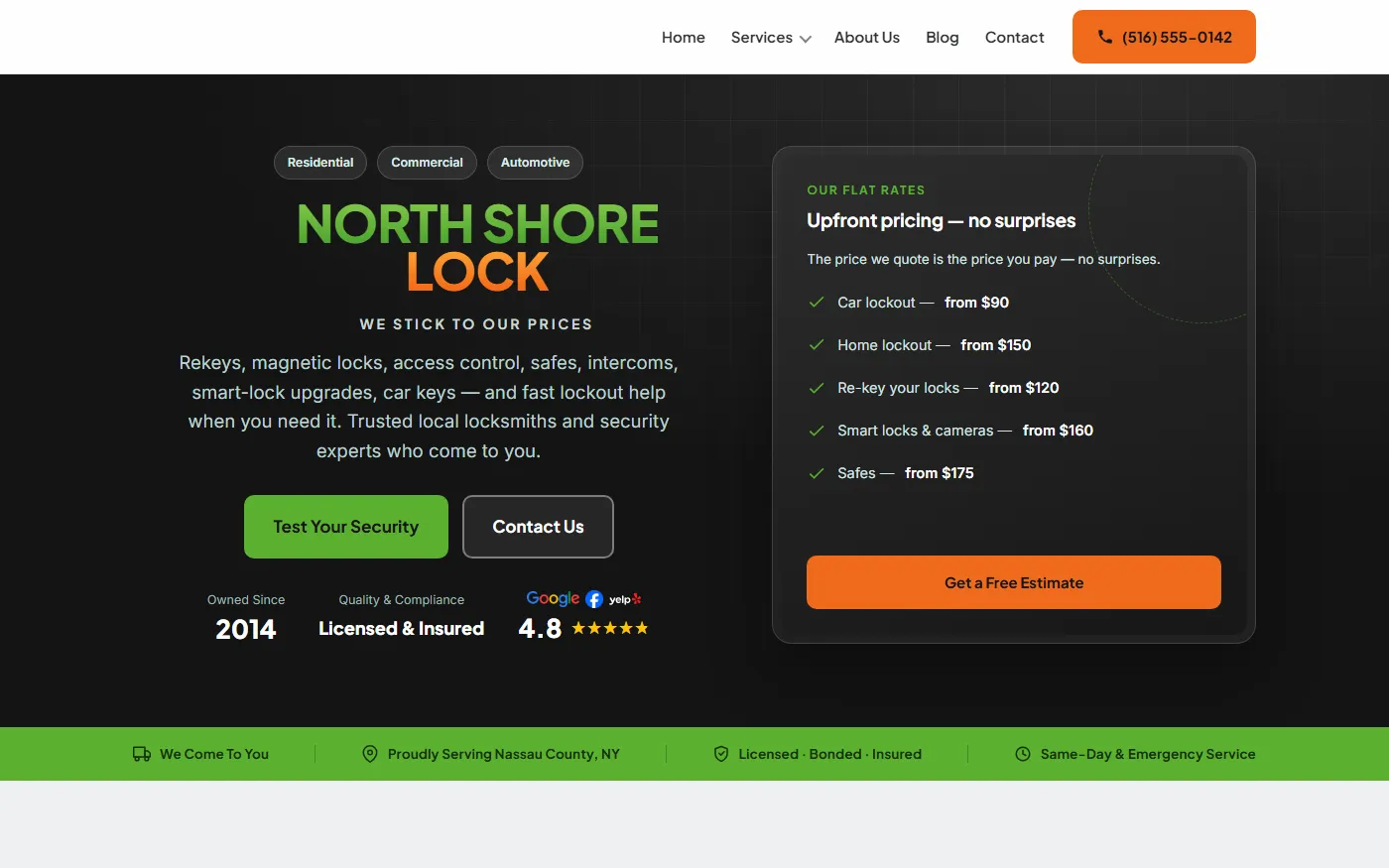
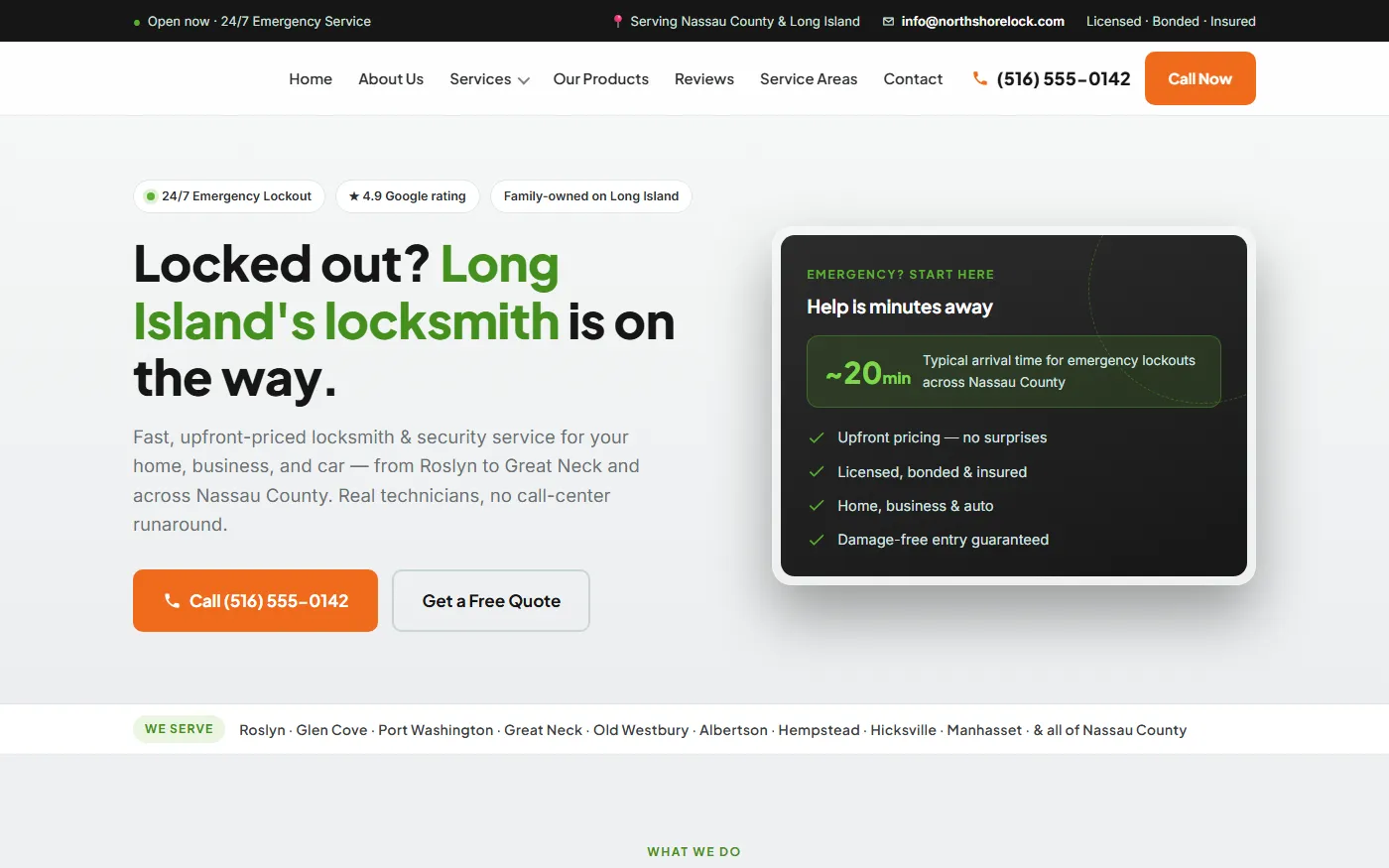
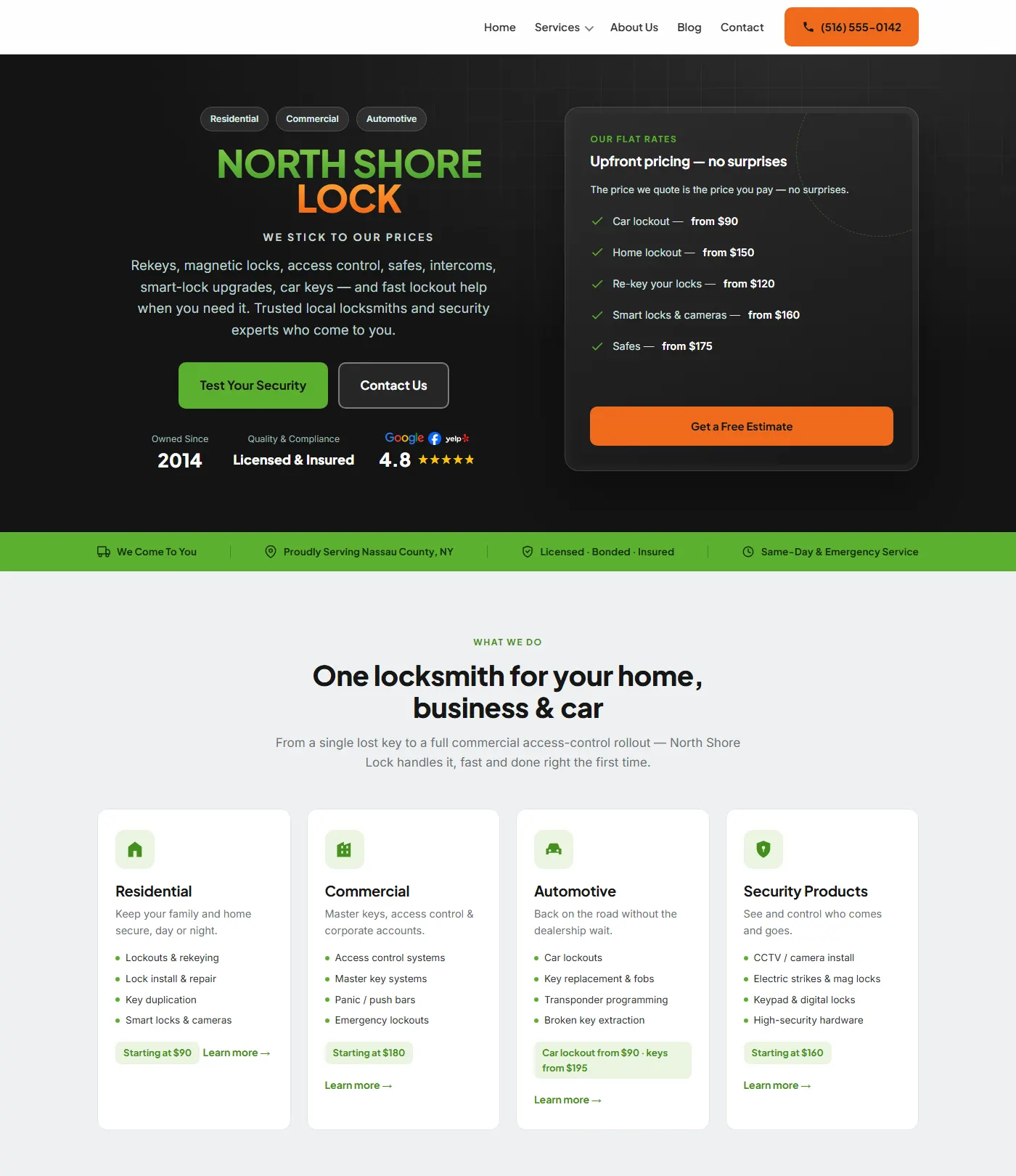
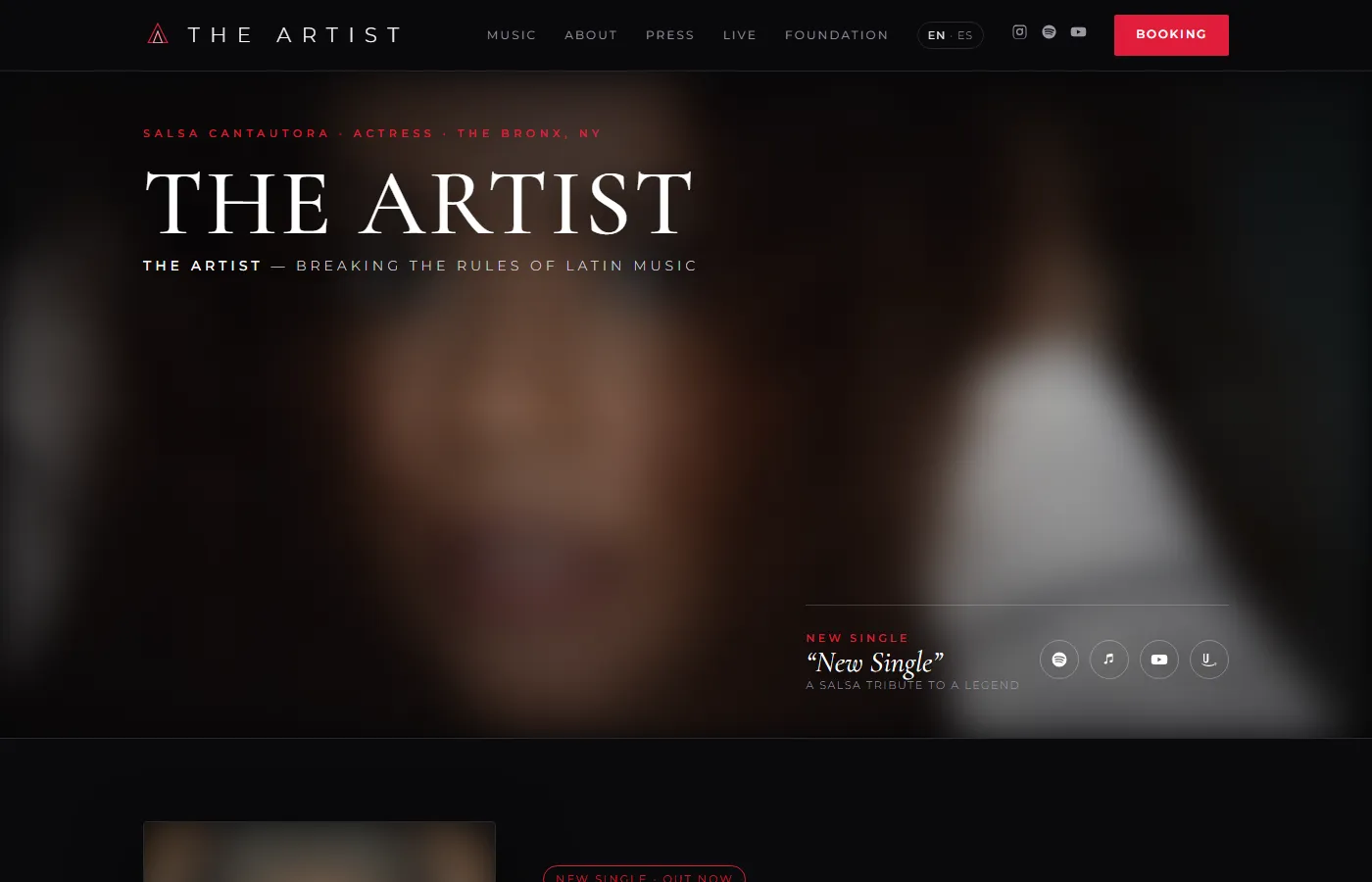
For a personal brand the same section looks different. A salsa singer-songwriter's audit (see the 41/100 example on the audit page) came with a bilingual artist-site mockup: name owned in the header, the new single with streaming buttons above the fold, an EPK bookers can send, and Person plus MusicGroup schema underneath so AI assistants stop confusing her with an appliance brand.
6. Tool ideas that earn links and leads
Where it fits, the plan includes a small tool built for the client's customers, because a useful tool earns links that a brochure page never will, and it turns visitors into leads. For the locksmith we built a working prototype before the proposal was sent:
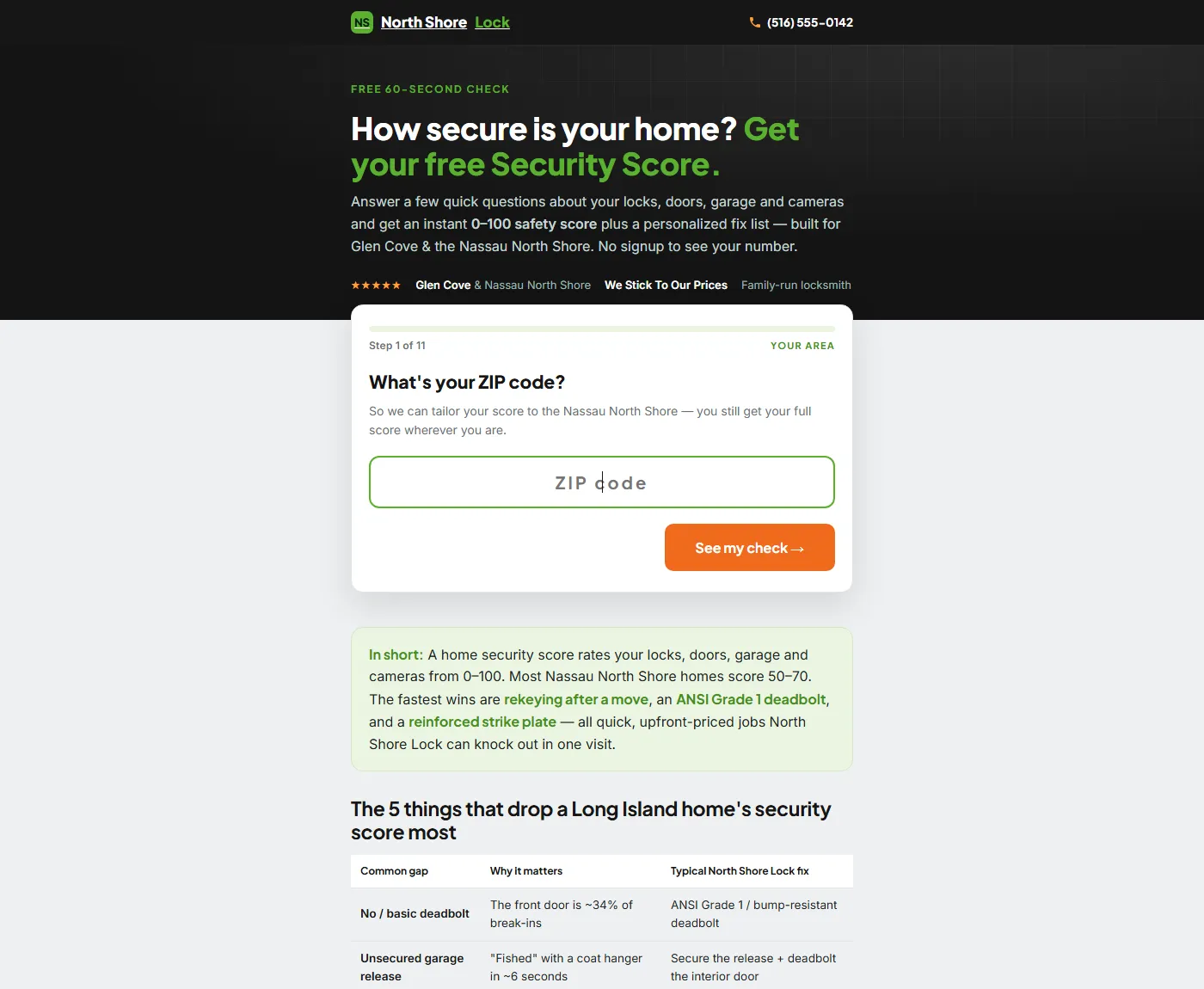
Other tool ideas that have shipped from audits: a free visibility checker for a consultancy, a "what does a rekey cost in my county" estimator, and an EPK page generator for performers. The rule is the same each time: it has to be useful to a stranger before it is useful to the client.
7. The plan, and what the first 90 days look like
The plan section is a set of cards, each one a piece of work you can point to. The locksmith's had eleven. Condensed:
Then the roadmap sequences it. Week one is always free quick wins so the client sees movement before any build. This one is from the artist's report:
Quick wins
Foundation
Authority
Compound
And if the client continues past the build, the report says exactly what a month of ongoing work contains, so there is nothing to wonder about:
- 4 Google Business Profile posts
- Review requests kept firing, every review answered
- 1 helpful local article
- 5 backlink outreaches
- Citation and map-pack monitoring
- AI-search tracking across ChatGPT, Google AI, Perplexity
- One email and referral touch
- A one-page results report: calls, map views, rankings, new reviews
What we don’t publish
The full per-industry prompt matrices, the scoring weights across the eleven dimensions, and the source-selection method behind our citation work stay in the paid report: that’s the product. What you’ve seen above is the shape of the evidence: real queries, quoted answers, named owners, dated measurement. Every audit contains all of it, about your business.
Doing it yourself? The audit is built for that too
You don’t need to hire us afterward. A meaningful share of audit buyers are DIYers and in-house marketers who want the diagnosis and the plan, then execute it themselves. The report is designed to stand alone: the keyword and query targets to chase, every fix written as an instruction with an owner and priority, a 30/60/90 sequence to work through, and the free tools to re-check your own progress. One flat $199, no retainer required, and the fee credits toward a first month only if you ever want one.
This is what $199 buys: evidence, quoted answers, and a plan with your name on it.
Delivered in 3–5 business days, 45-minute strategy call included.
Or start free: the 60-second visibility check runs a mini version of the query matrix above.